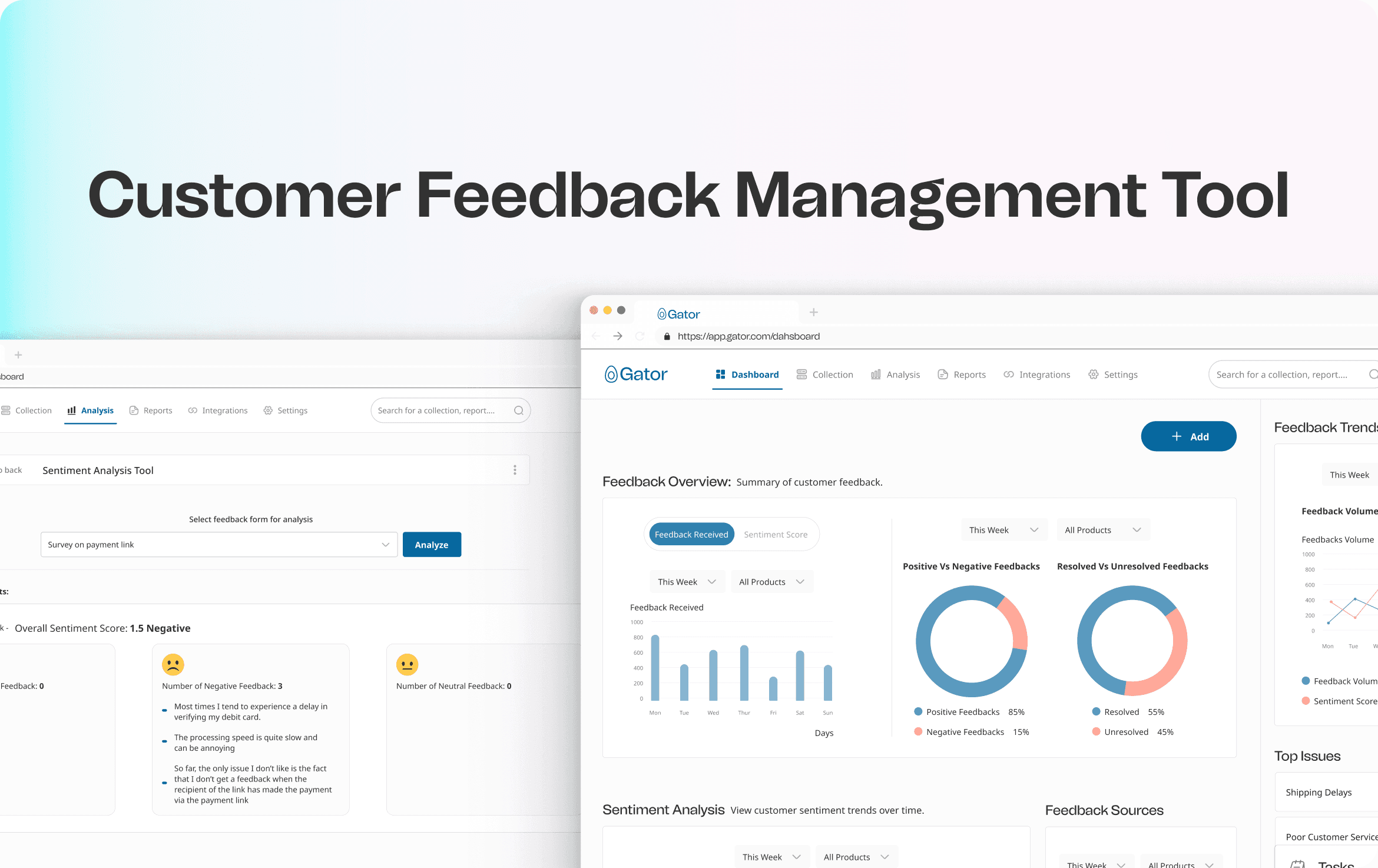
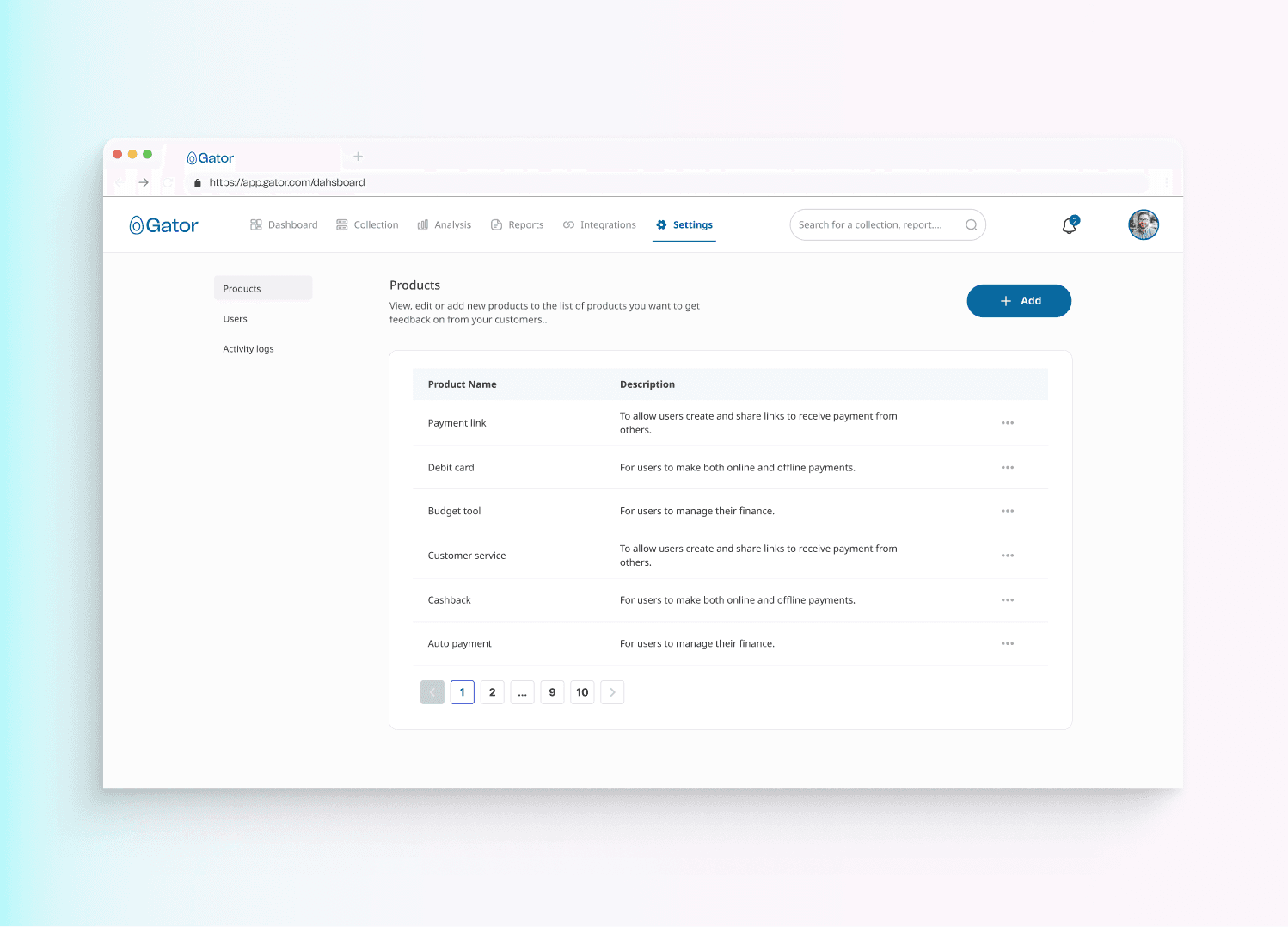
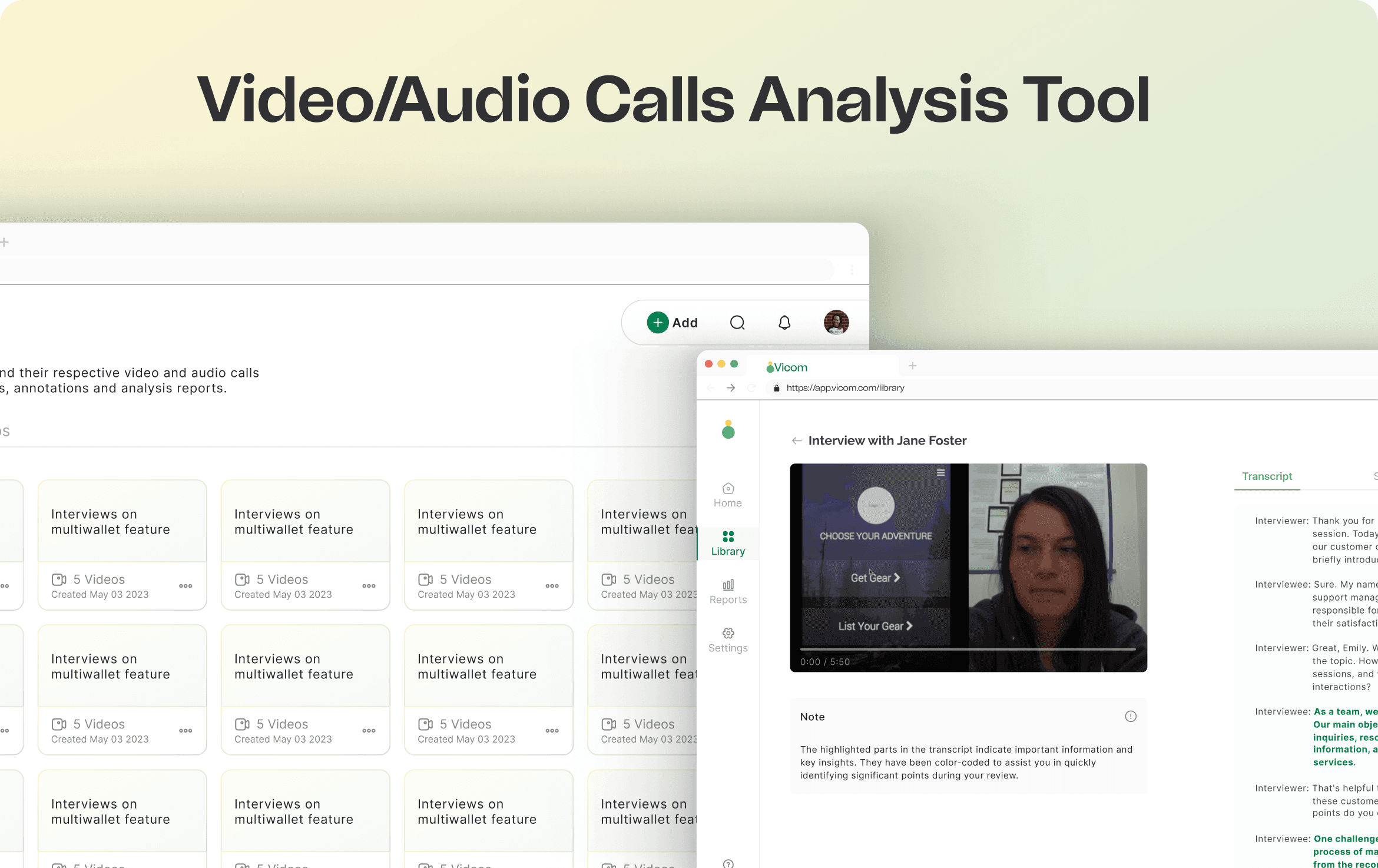
In today's competitive landscape, customer feedback analysis has emerged as a game-changer for businesses. By harnessing the power of customer insights, organizations can uncover valuable opportunities, address pain points, and drive continuous improvement.
In this captivating case study, I delve into the profound impact of customer feedback analysis, revealing how it empowers businesses to make data-driven decisions, enhance products and services, and ultimately foster long-lasting customer relationships. Prepare to be inspired as we unravel the untapped potential that lies within the voice of the customer.
My Responsibilities
UX strategy
UX research
Visual design
Prototyping
UX writing
Tools
Figma
The Problem
In today's dynamic business landscape, one of the most significant challenges faced by organizations is effectively harnessing the wealth of customer feedback data. The problem at hand was clear: amidst the abundance of unstructured feedback, businesses were struggling to extract meaningful insights, identify emerging trends, and take targeted actions to drive success.
Here's to more context and to what the goal is
Understanding the voice of the customer has become a cornerstone of successful businesses. However, deciphering the insights buried within the mountains of customer feedback is no easy feat. Traditional methods of manual analysis and keyword search fall short of uncovering the nuanced sentiments and underlying themes in feedback data.
To bridge this gap, I embarked on a mission to revolutionize the feedback analysis process. By harnessing the power of advanced text analytics and machine learning algorithms, we aimed to extract meaningful insights, identify emerging patterns, and enable businesses to make data-driven decisions with confidence.
How did I know I was solving a problem? At least I believe I did 😅
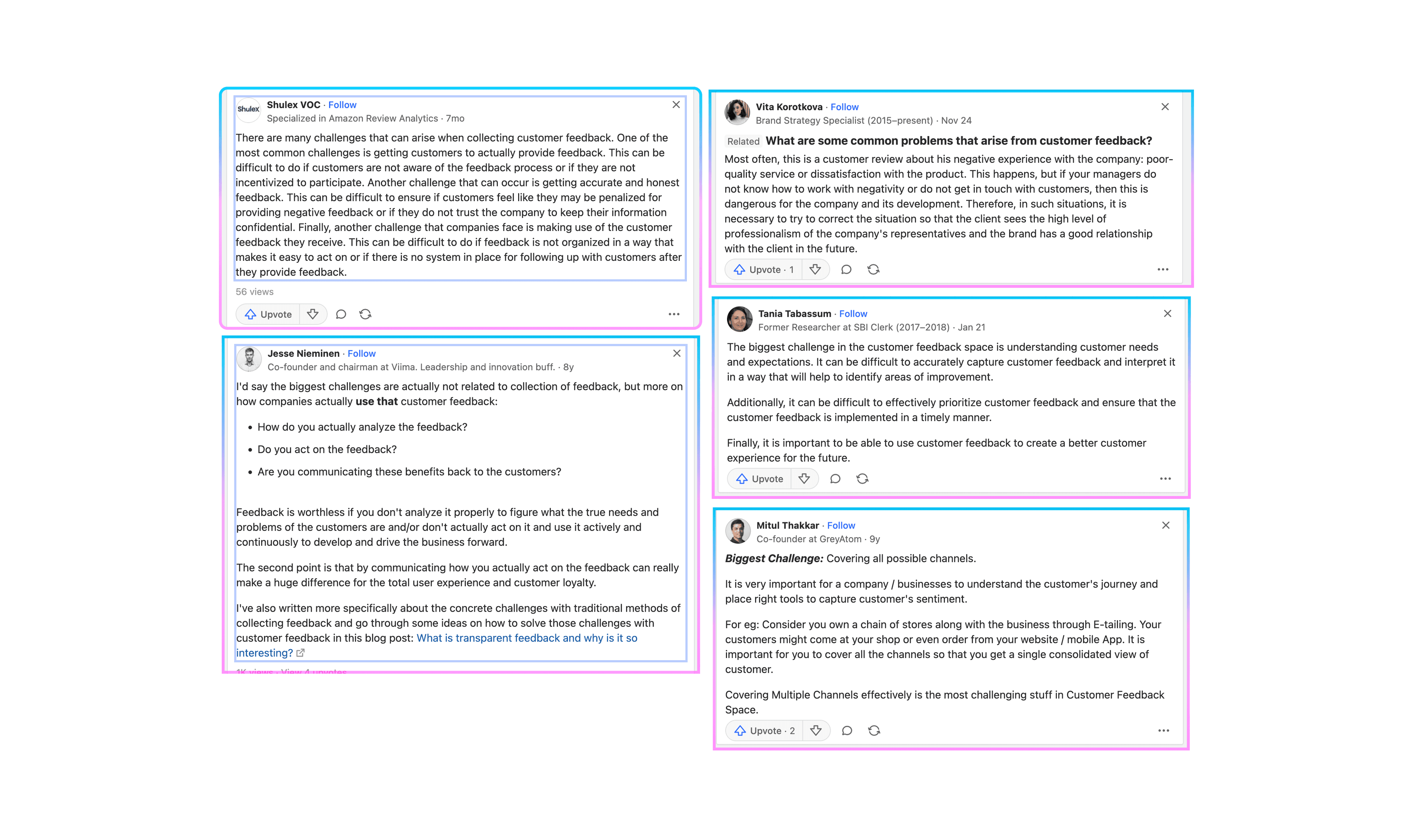
To ensure my solution addressed a real problem faced by businesses, I embarked on a rigorous research journey. Conducting thorough secondary research, I delved into industry reports, expert forums, and market trends.
My findings revealed eye-opening insights about the challenges businesses encounter when dealing with customer feedback. From the growing importance of sentiment analysis to the struggle of extracting actionable insights from unstructured data, I uncovered a pressing need for an advanced customer feedback management tool.
The following are the problems that I decided to work on based on the sources above:
Difficulty in identifying sentiments behind feedback
Poor analysis of feedback
Difficulty in prioritizing feedback and ensuring timely implementation
Difficulty in covering multiple channels for collected feedback
Addressing each problem, let's see how it goes 😎
Problem 1 - Difficulty in identifying sentiments behind feedback
In today's highly competitive business landscape, understanding customer sentiments is crucial for staying ahead of the curve. Customer feedback holds a wealth of invaluable insights that can shape business strategies, drive improvements, and foster stronger customer relationships. However, the challenge lies in deciphering the sentiments embedded within this feedback.
Why sentiment analysis matters:
Accurately identifies levels of customer satisfaction.
Pinpoints issues, recurring problems, and emerging trends.
Enables resource prioritization and prompt action.
Solution:
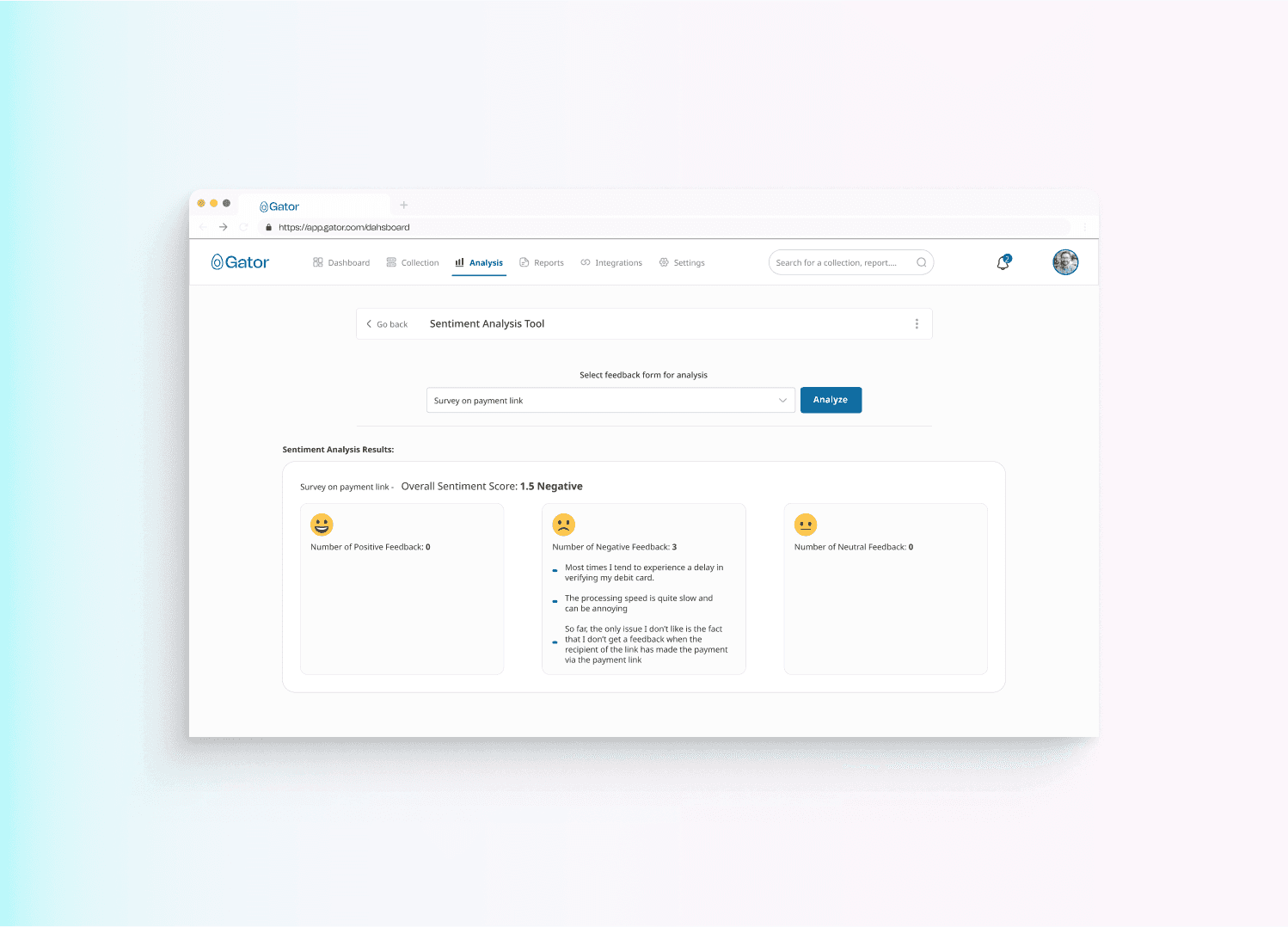
Leverage cutting-edge text analytics tools to automate sentiment analysis. The user selects a feedback form to process for sentiment analysis, and results are displayed in Positive, Negative, or Neutral categories.
A short walkthrough of the solution is available below. You can also open it directly here: Loom demo.
UI Note:
If feedback in a category overflows the container height, it scrolls within that container for better usability.
The image below is the end result when the sentiment analysis tool is used:
Problem 2 - Poor analysis of feedback
Feedback from customers is a goldmine, but its value depends on effective analysis.
Why proper analysis matters:
Uncovers actionable insights.
Identifies trends and potential issues.
Informs product/service improvements.
Solution:
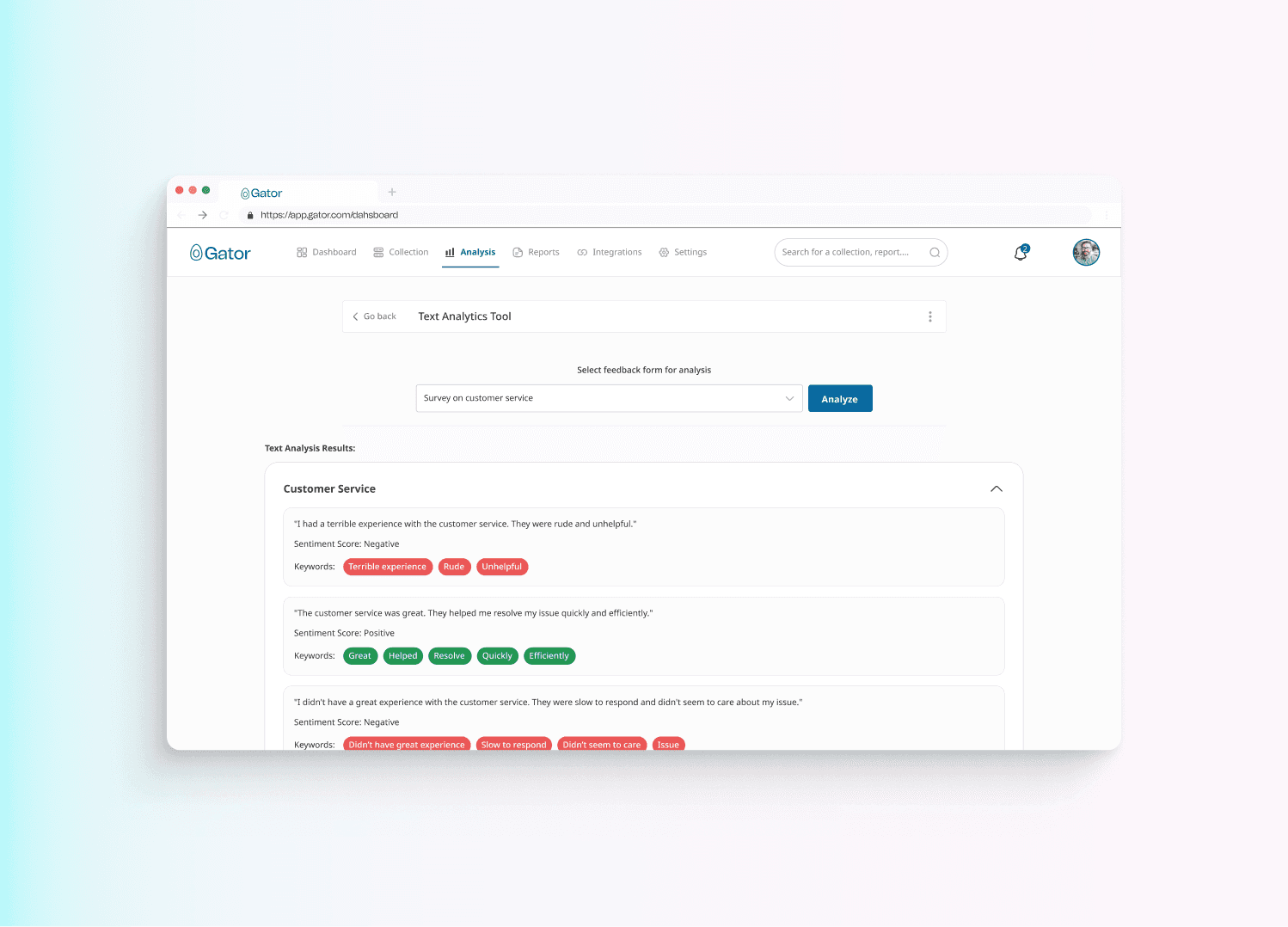
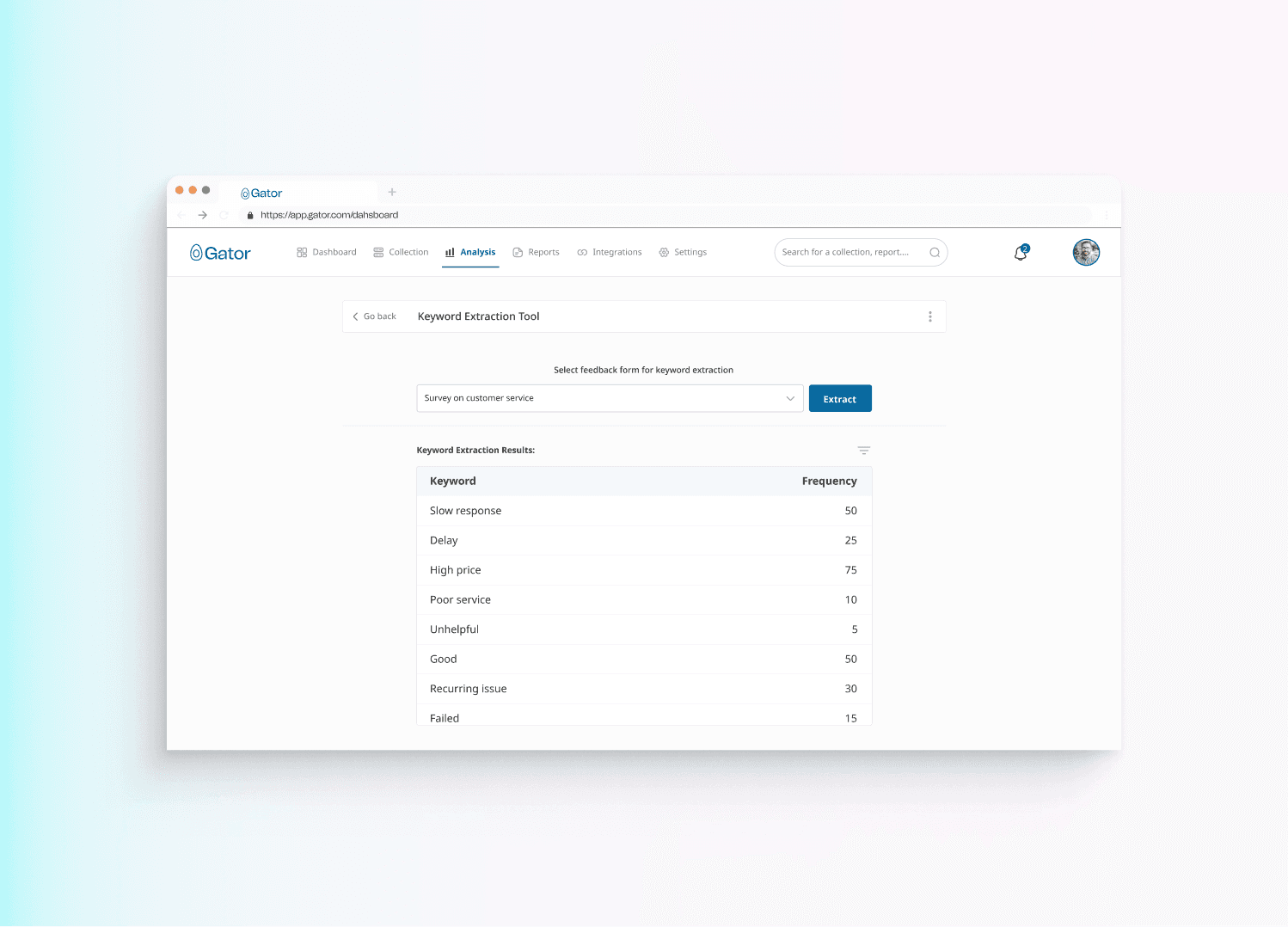
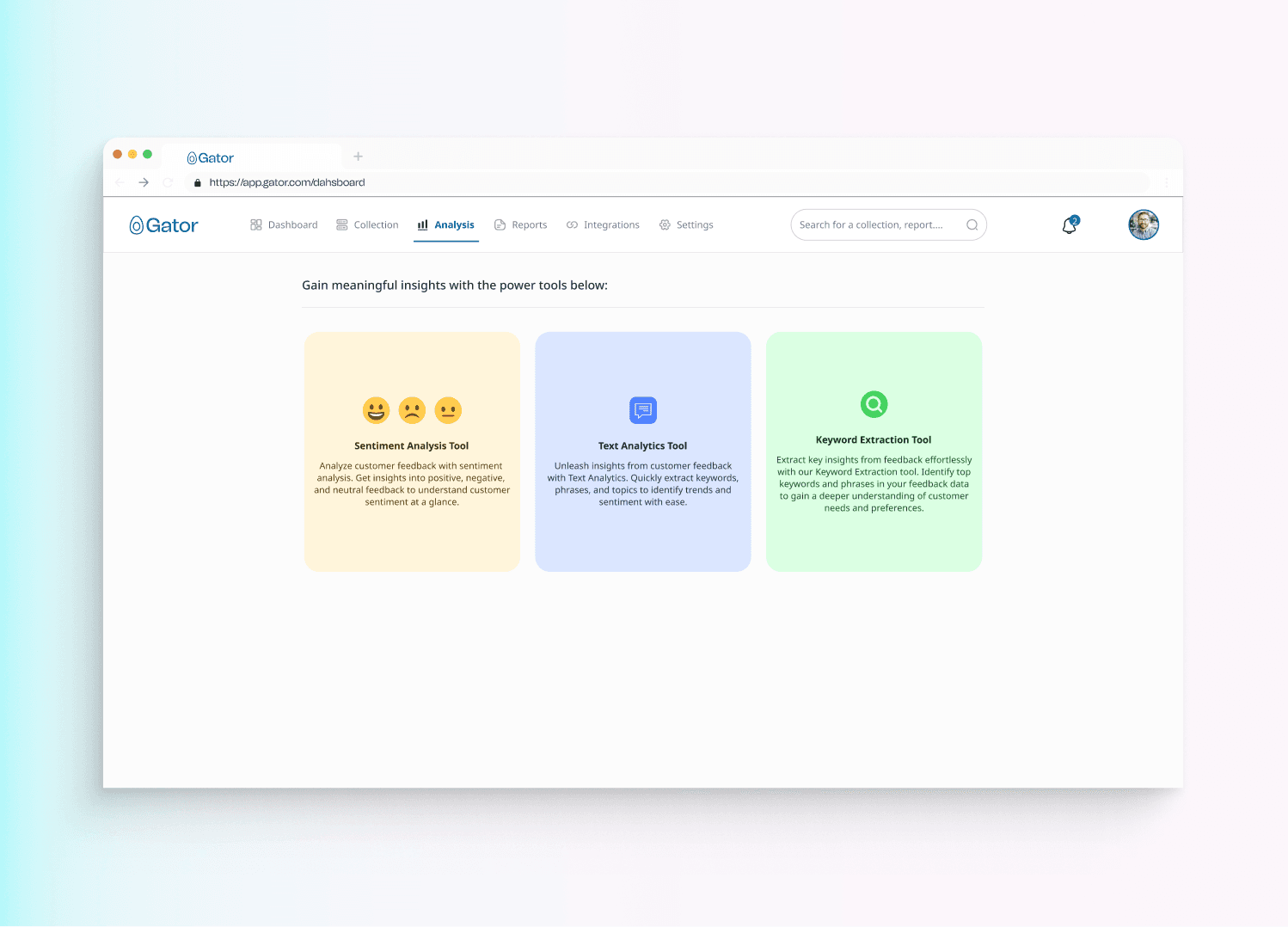
Designed two tools: Text Analytics (uses NLP to categorize feedback, identify sentiments, and detect trends) andKeyword Extraction (extracts keywords/phrases, showing their frequency and letting users drill down to specific feedback statements).
A short walkthrough of the solution is available below. You can also open it directly here: Loom demo.
UI enhancement:
Keyword selection reveals related feedback in a modal with paginated results for better navigation and digestibility.
Gator text analytics screen
Problem 3 - Difficulty in prioritizing feedback and ensuring timely implementation
Why prioritization/timely implementation matters:
Maximizes impact by addressing the most important issues first.
Improves customer satisfaction by acting promptly.
Solution:
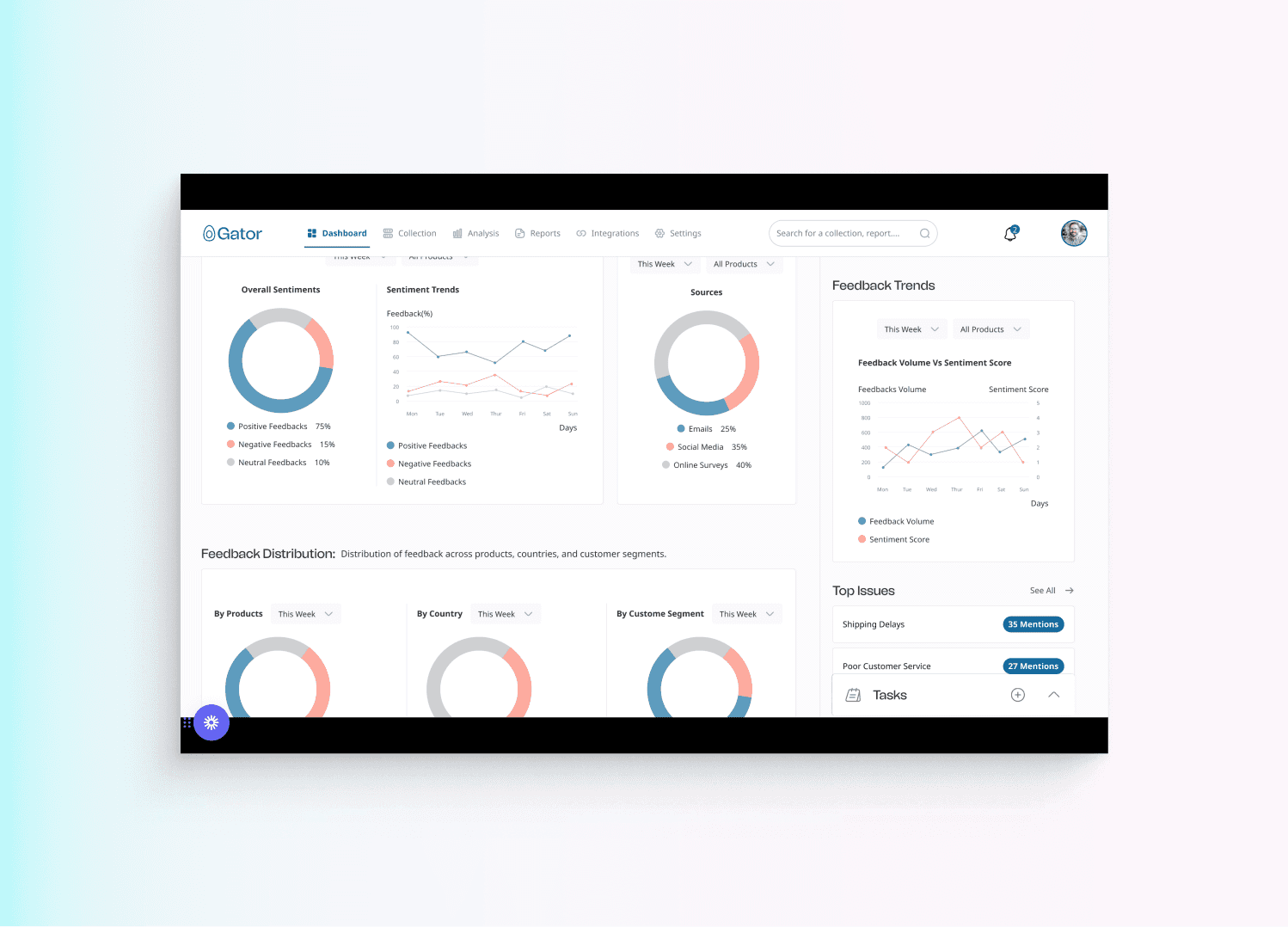
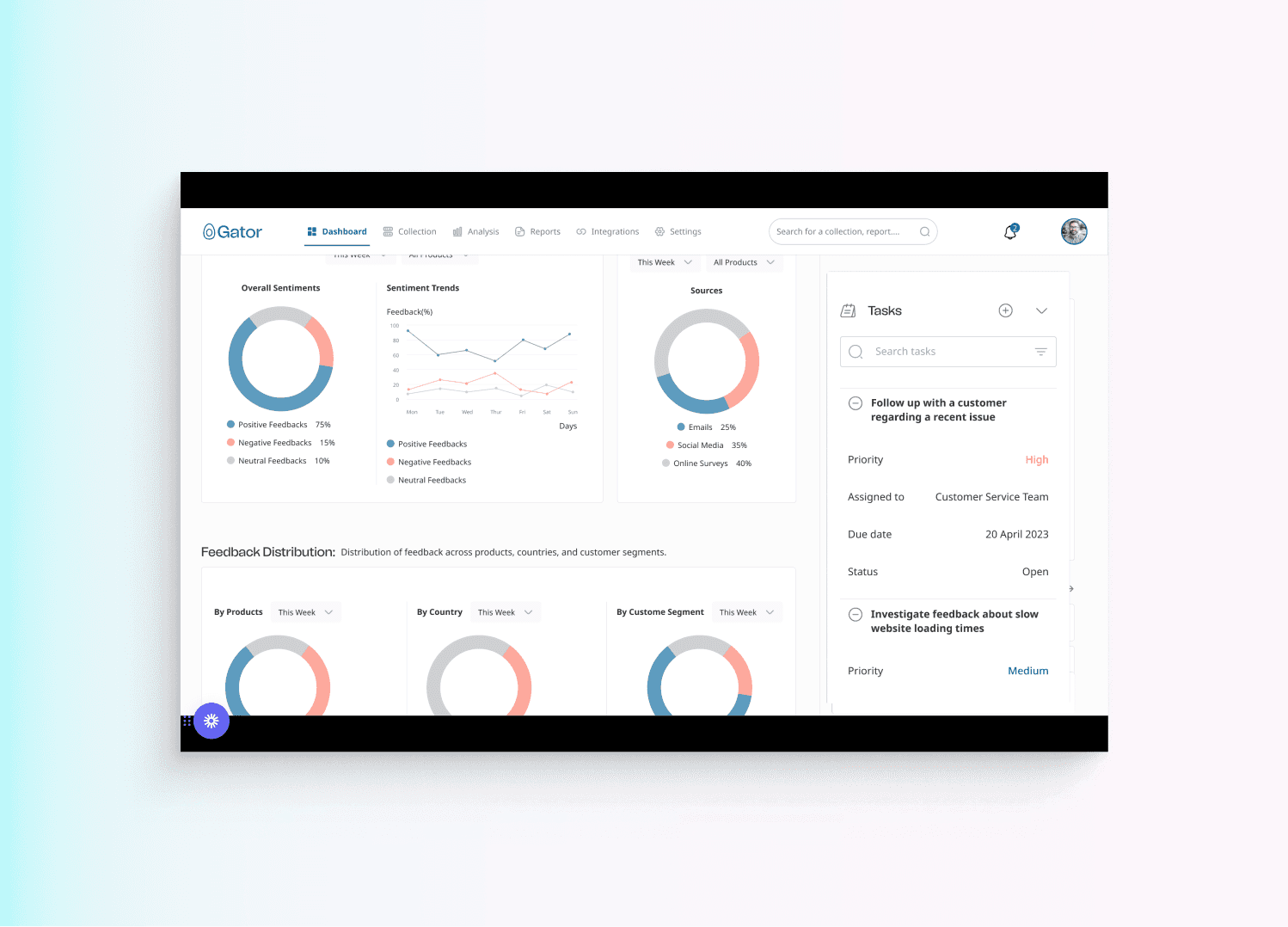
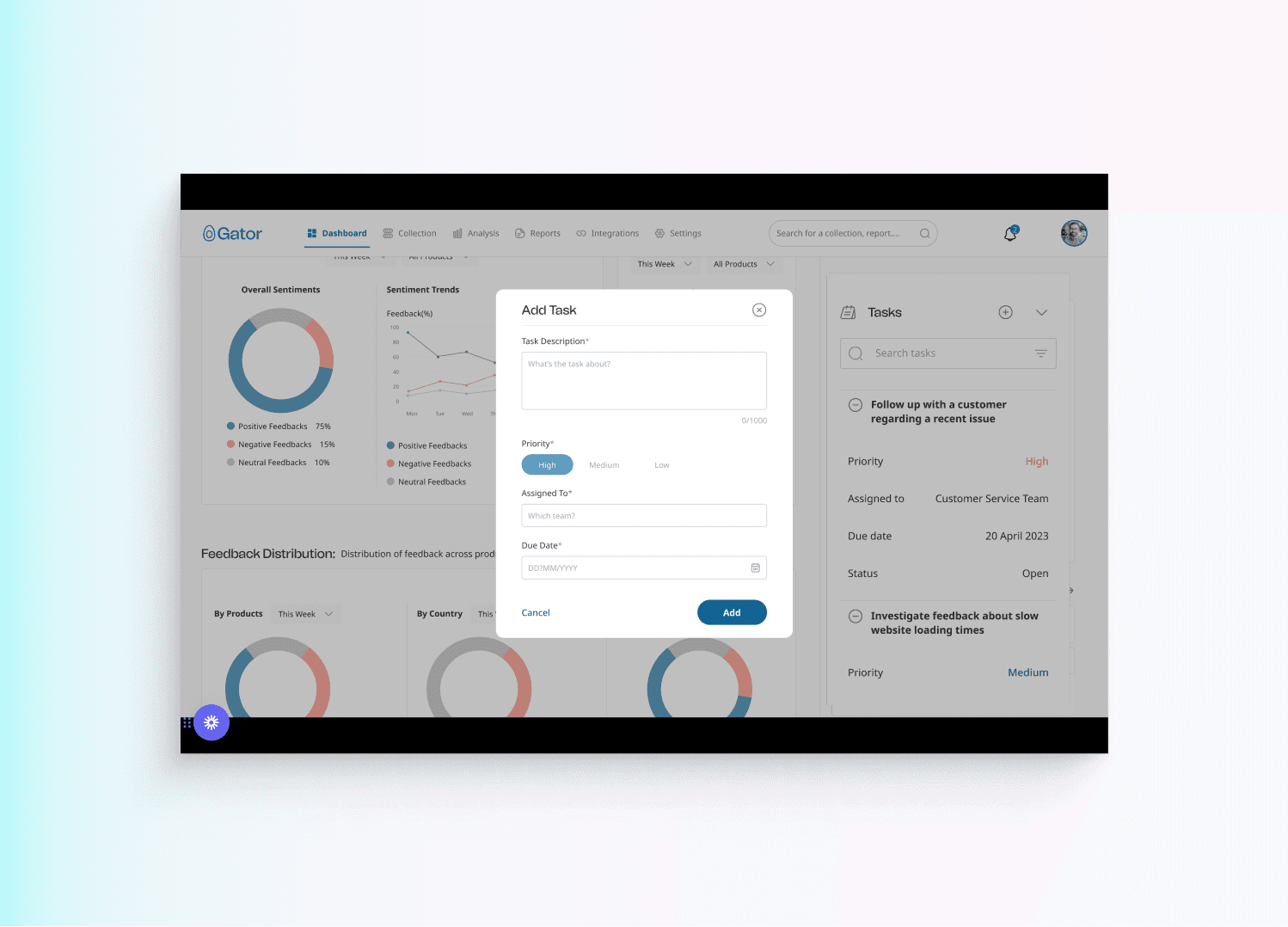
A comprehensive feedback management system that uses text analytics to categorize and score feedback by impact and urgency, plus features for collaboration, task assignment, and automatic reminders for timely implementation.
A short walkthrough of the solution is available below. You can also open it directly here: Loom demo.
The images below depict the prioritization and timely implementation design solutions:
Gator dashboard 1
Problem 4 - Difficulty in covering multiple channels for collected feedback
Why multi-channel aggregation matters:
Collects a holistic customer view.
Captures diverse perspectives.
Challenges:
Data fragmentation
Inconsistent analysis
Solution:
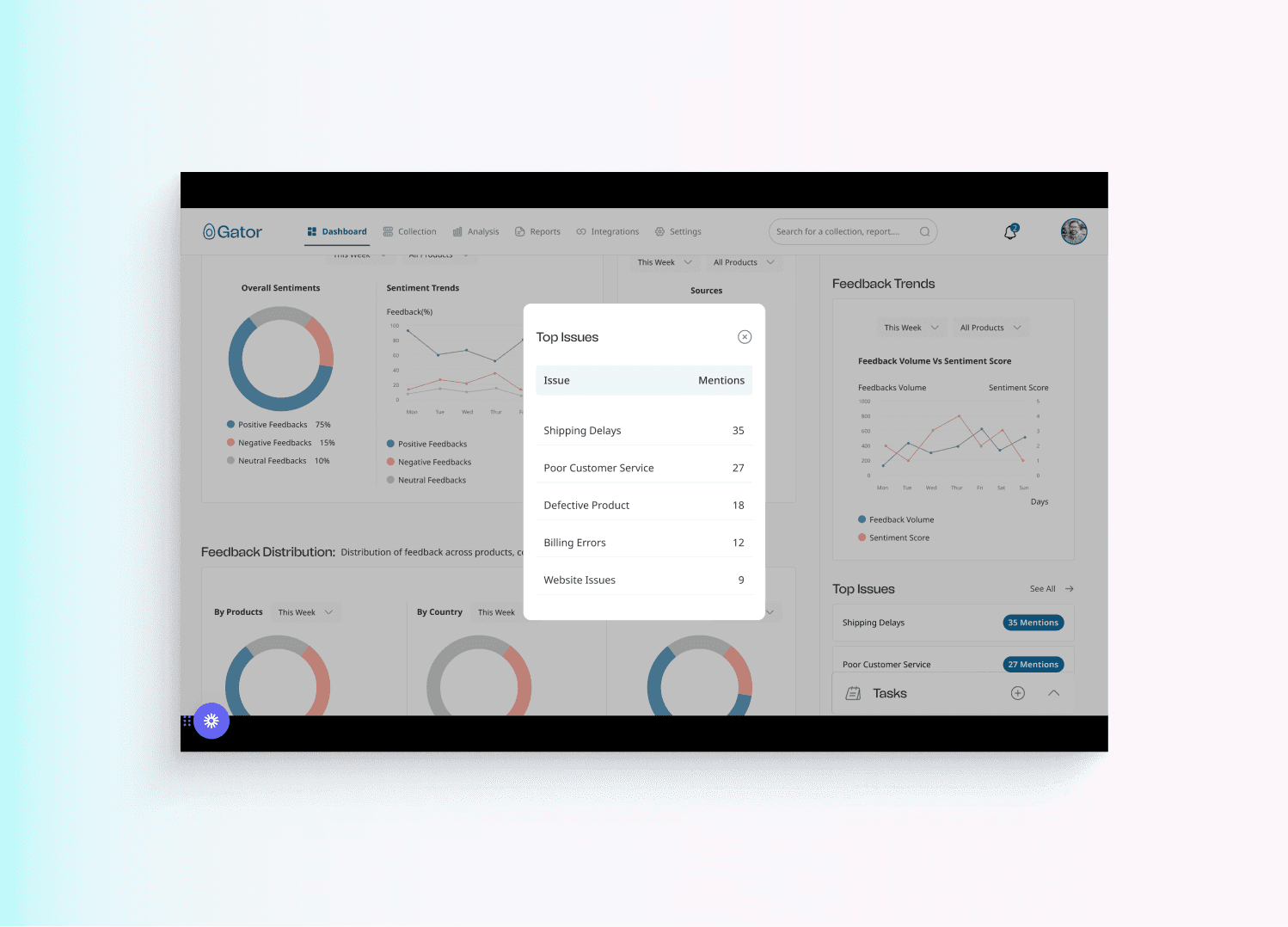
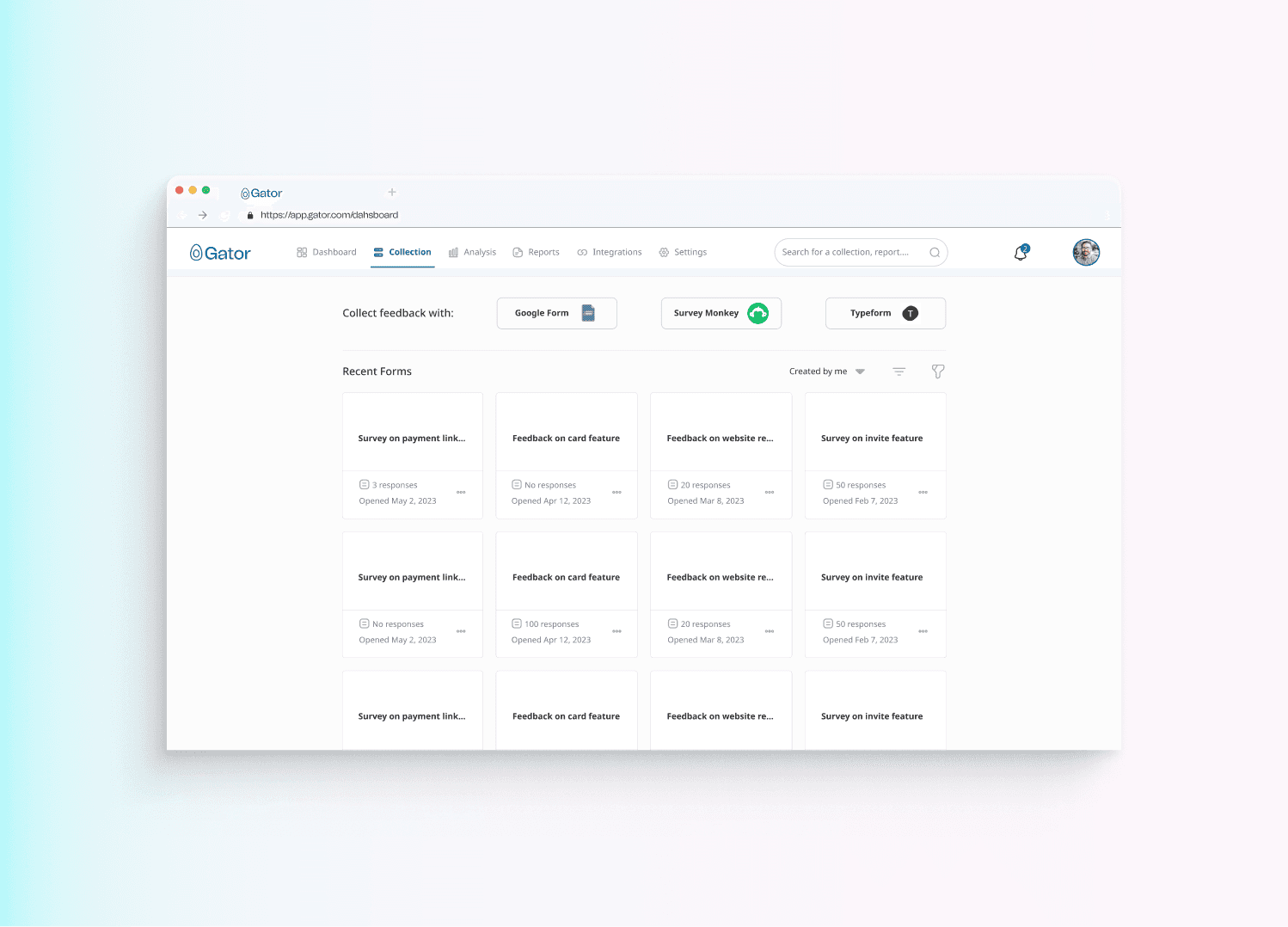
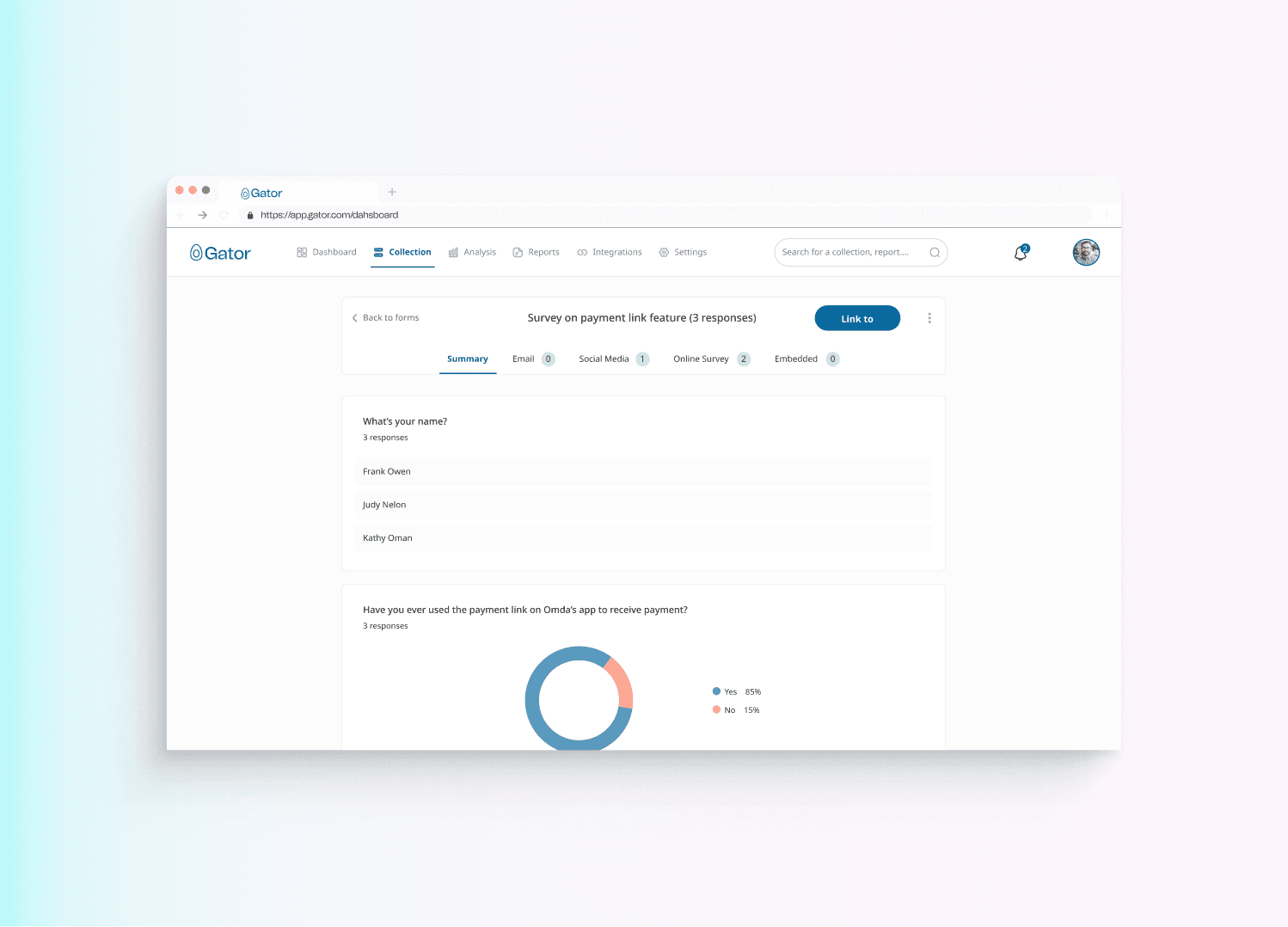
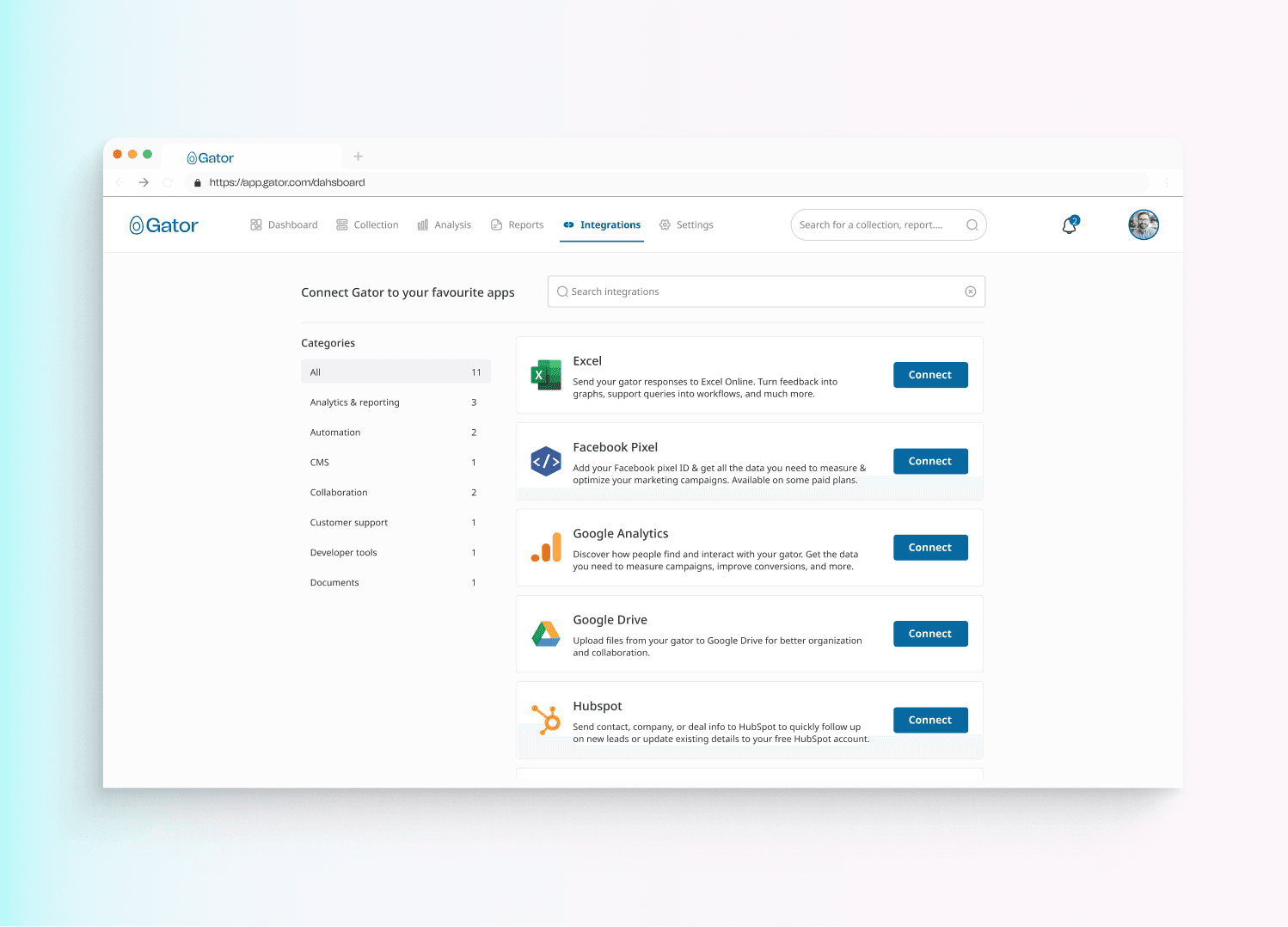
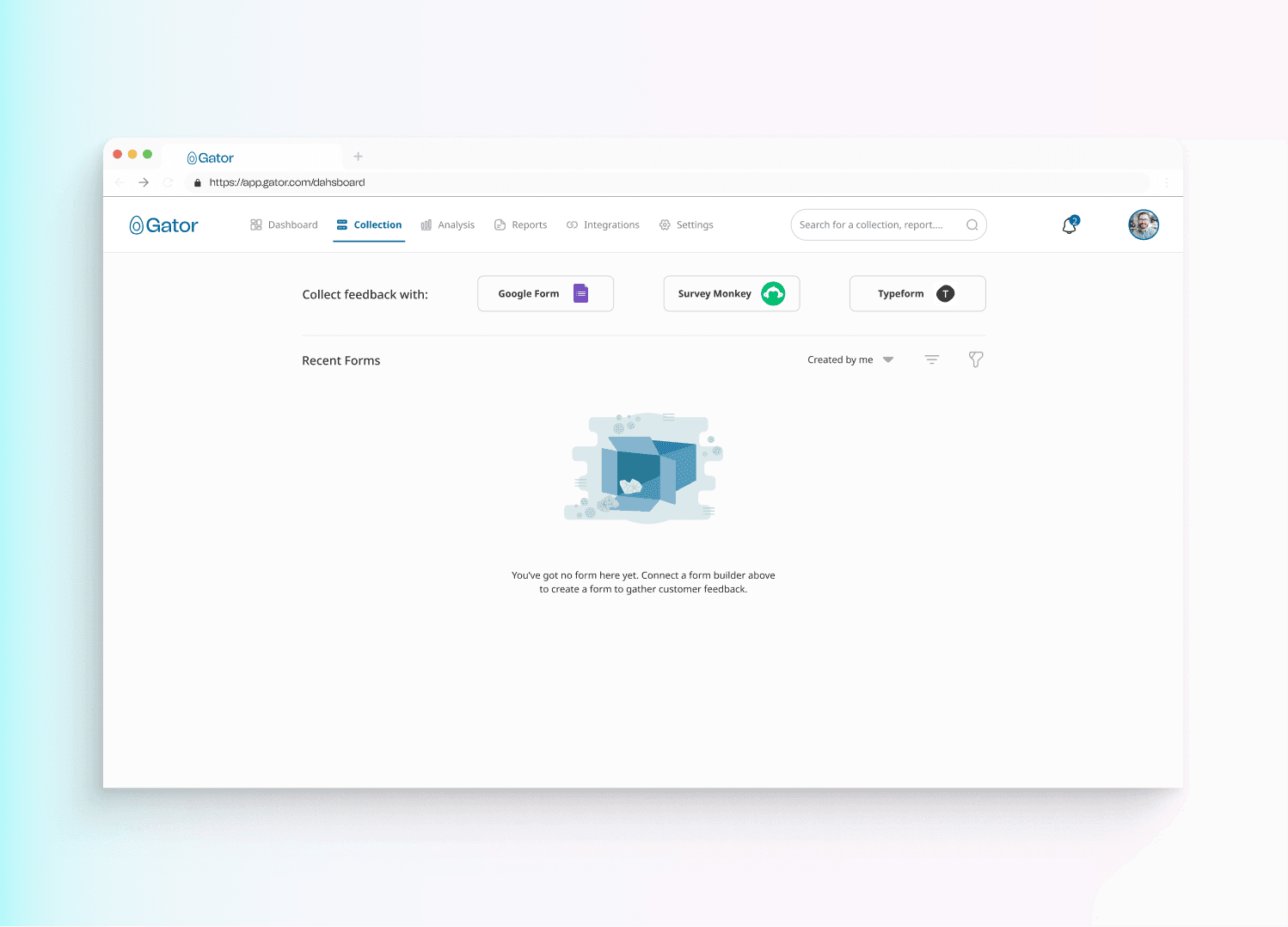
Centralized platform integrating feedback from multiple sources, with unified analysis and response workflows.
A short walkthrough of the solution is available below. You can also open it directly here: Loom demo.
The images below are part of the solution for covering multiple feedback collection channels:
Gator dashboard 3
Well, What did I learn 🤔
Faced challenges understanding AI and NLP solutions but overcame them through research and networking.
Encountered UI challenges (e.g., loading animations, platform integrations), leading to creative solutions and learning opportunities.
More Screens
Check out the landing page design for this project and other screens.
Additional screen 2
Conclusion
This case study highlights the challenges businesses face in managing and extracting valuable insights from customer feedback. The developed management tool empowers businesses to analyze feedback effectively, make data-driven decisions, and implement meaningful change through:
Advanced NLP for extracting themes, sentiments, and trends.
Keyword extraction for pattern identification.
Drill-downs and categorization for structured exploration.
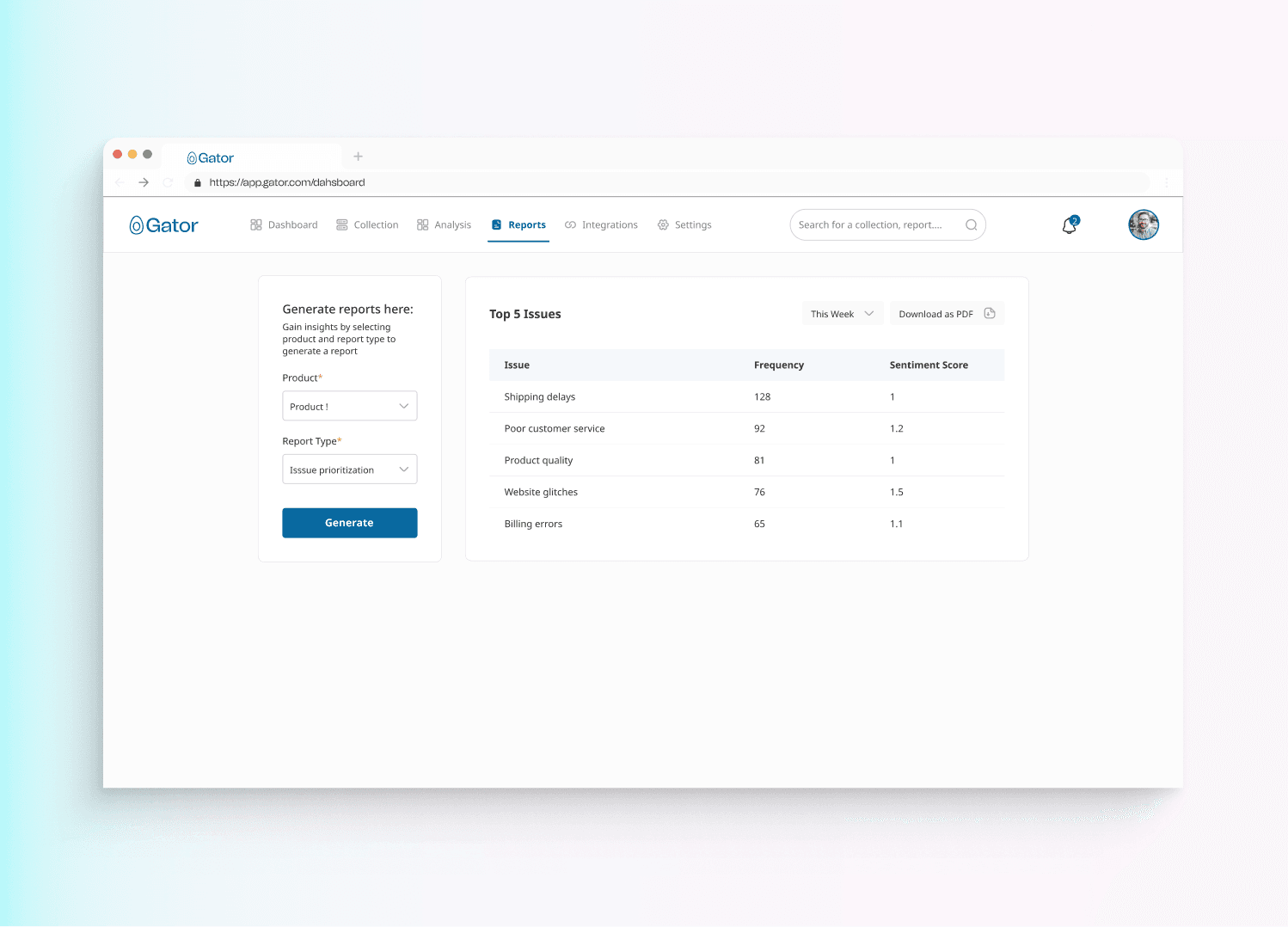
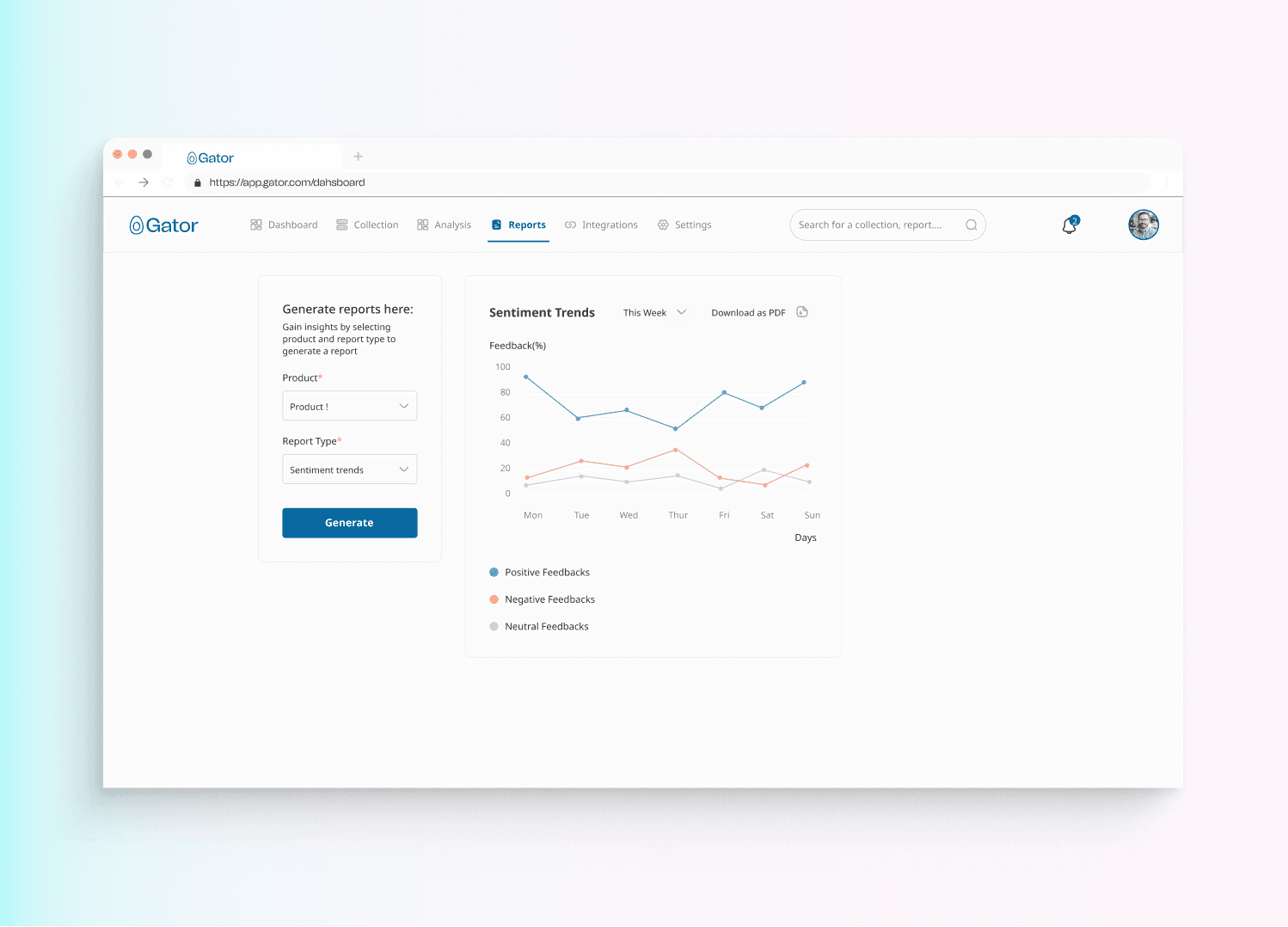
Visual reporting for trend tracking.
Driven by a passion for UX and customer empowerment, this solution aims to help organizations truly listen, iterate, and deliver excellent experiences.